


【基因列表】
TSC1、TSC2
【盛行率】
結節硬化症在台灣的盛行率估計為1:95136,並沒有城市間的差異。
【臨床症狀】
此症反映在神經系統上的狀況包括:癲癇、智力減退,甚至會在不同的器官上出現腫瘤,臉部也可能出現一粒粒的血管纖維瘤,身上則是有可能出現大片的脫色白斑或者粗糙的鯊魚斑。
【遺傳模式】
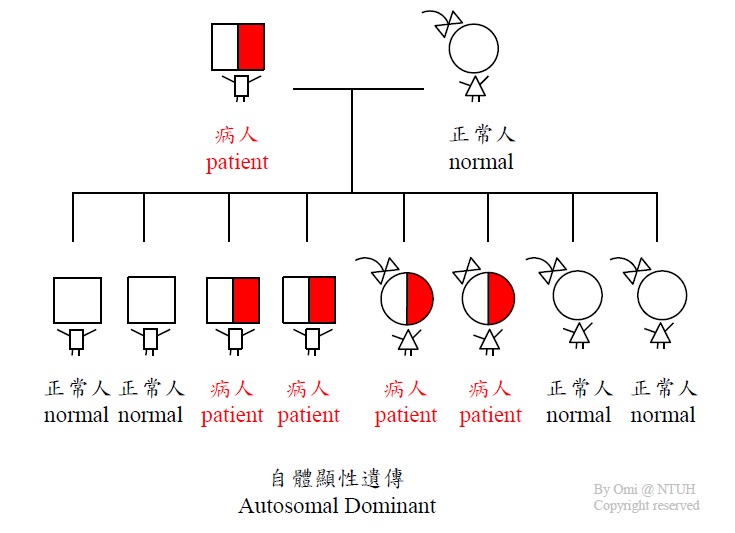
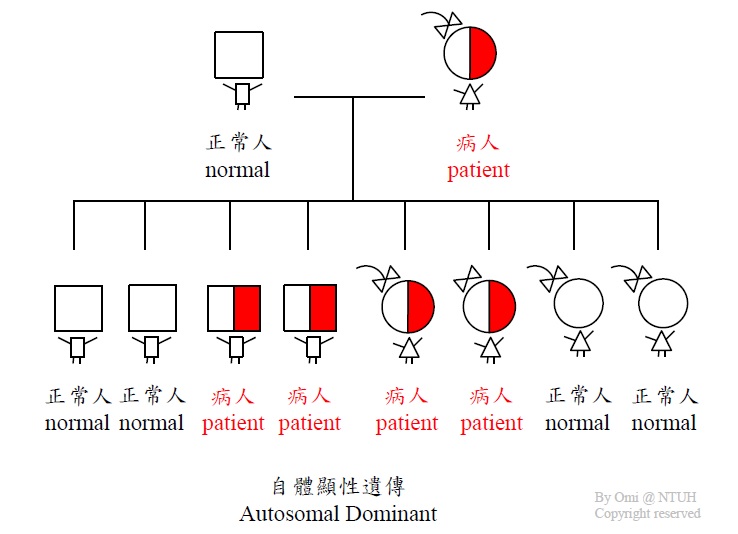
為一體染色體顯性遺傳,不分性別,每一胎皆有1/2機率罹患此症;但約有60%~70%患者,是因新的或散發性基因突變而導致此症。
【檢驗方法】
針對周邊血液中之白血球萃取DNA,進行檢體製備後利用探針捕捉待測基因編碼區域,以次世代定序技術進行定序,並由生物資訊分析而評估所發現之變異點是否具致病性。
【報告時程】
自收件起8-12週。
【檢驗侷限性】
1. 本檢驗方法檢驗TSC1 及TSC2 全基因區域,目前所使用的DNA定序分析方法,其檢出率為72-85%。
2. 本檢測方法採用探針捕捉基因序列與次世代方法定序,仍有可能部分基因序列因序列捕捉與定序深度不足而產生變異位點偵測疏漏。若基因變異屬於大片段插入、大片段缺失、翻轉或複雜重組,則可能無法由本方法檢測出來。
【參考文獻】
1. Northrup et al. (2013) Tuberous sclerosis complex diagnostic criteria update: recommendations of the 2012 international tuberous sclerosis complex consensus conference. Pediatric Neurology 49:243-54
2. Chen et al. (2020) The efficacy and safety of topical rapamycin/calcitriol for facial angiofibromas in patients with tuberous sclerosis complex: a prospective, double‐blind randomized clinical trial. British Journal of Dermatology. doi:10.1111/bjd.18949.
3. Tyburczy et al. (2015) Mosaic and intronic mutations in TSC1/TSC2 explain thee majority of TSC patients with no mutation identified by conventional testing. PLoS Genetics. 5;11:e1005637
4. Peron et al. (2018) Genetics, genomics and genotype-phenotype correlations of TSC: Insights for clinical practice. Am J Med Genet C Semin Med Genet. 178:281-90
更多資訊:罕見疾病一點通 ,Prevalence of Tuberous Sclerosis Complex in Taiwan: A National Population-Based Study(非臺大醫院網域)