1. Establishing an Excellence-Based Integrated Heart Failure Care System
Heart failure (HF) is a complex chronic cardiovascular condition with significant global health impact. With the rapid aging of the population, the prevalence of heart failure in Taiwan has reached approximately 5.5%, affecting an estimated 700,000 individuals nationwide, particularly among those aged 65 years and older. Heart failure is characterized by high recurrence and hospitalization rates, accounting for more than 70,000 hospital admissions annually, with a one-year mortality rate approaching 33%. Therefore, developing integrated care models to improve prognosis and reduce hospital readmissions has become a central priority in healthcare systems worldwide.
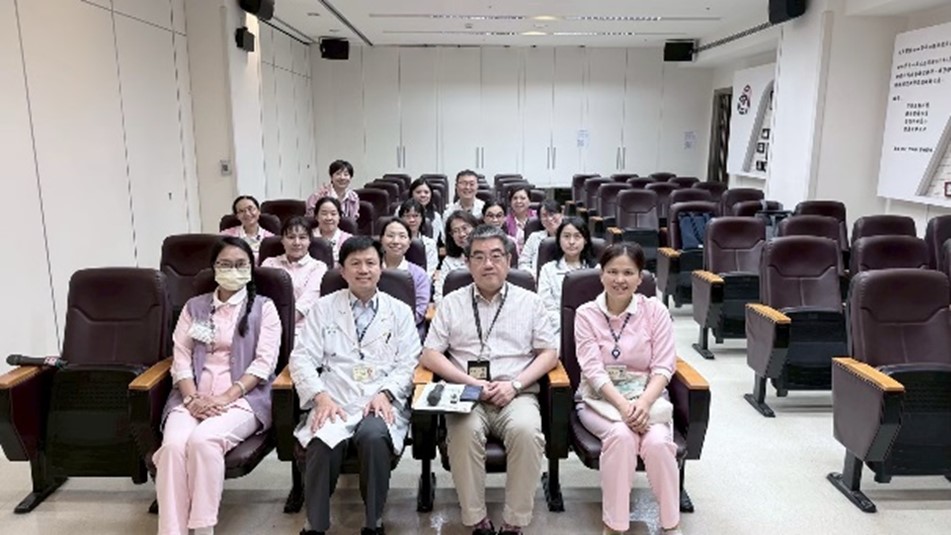
Major international clinical guidelines in Europe and North America emphasize that multidisciplinary team (MDT) care represents the gold standard for heart failure management. As a leading national academic medical center, National Taiwan University Hospital (NTUH) plays a pivotal role in cardiovascular care and research. To further advance patient-centered care, NTUH formally established the Heart Failure Care Team in 2018, integrating expertise from cardiology, cardiac surgery, nursing, rehabilitation, pharmacy, nutrition, social work, and case management.
This multidisciplinary collaboration provides comprehensive and continuous care, covering acute treatment, inpatient management, discharge planning, and long-term follow-up.
Since 2020, the team has successfully obtained the Heart Failure Disease Care Quality Certification from the Joint Commission of Taiwan for two consecutive cycles, demonstrating NTUH’s excellence in disease management, multidisciplinary collaboration, and quality improvement in heart failure care.
In recent years, the team has further integrated advanced digital health technologies into clinical practice. Leveraging large language models (LLMs), NTUH has developed automated risk assessment tools, including MAGGIC score and CHA₂DS₂-VASc scoring, as well as an AI-assisted cardiovascular intelligent summary system. With AI support, the clinical team can more accurately identify high-risk patients and reduce clinical data compilation time by up to 80%, allowing healthcare professionals to focus more on high-quality patient communication and education, thereby advancing both precision medicine and compassionate care.
2. Multidisciplinary Team Collaboration Model
The NTUH Heart Failure Team provides comprehensive care across six core domains of heart failure, including ischemic, valvular, arrhythmogenic, genetic, and dilated cardiomyopathies, as well as advanced-stage heart failure.
The program adopts an internationally recognized multidisciplinary care model, in which healthcare professionals from multiple specialties jointly provide comprehensive clinical services.
Core team members include:
• Cardiologists
• Cardiac surgeons
• Heart failure case managers
• Nurse practitioners and nursing teams
• Rehabilitation physicians, physical therapists, and occupational therapists
• Clinical pharmacists
• Dietitians
• Respiratory therapists
• Social workers
• Clinical psychologists and psychiatric specialists
• Palliative care team
• Health information technology specialists (Smart Healthcare Team)
Through interdisciplinary collaboration, the team evaluates patient needs from multiple professional perspectives, develops personalized treatment and care plans, and provides medical, psychological, and social support, thereby enhancing overall quality of care.
NTUH has also established structured interdisciplinary decision-making mechanisms, including:
• Heart Failure Core Team Meetings
• Multidisciplinary Heart Failure Care Conferences
• Heart Transplantation and Mechanical Circulatory Support (MCS) Case Conferences
• Joint Cardiovascular Medicine and Cardiac Surgery Case Discussions
These regular meetings facilitate real-time information exchange and collaborative clinical decision-making, ensuring comprehensive and precise treatment planning.
3. Comprehensive Heart Failure Care Pathway
NTUH has developed a comprehensive heart failure care pathway, providing continuous care from acute treatment to long-term follow-up after hospital discharge.
(1) Acute Treatment
The NTUH Cardiovascular Center integrates resources from cardiology and cardiac surgery to provide advanced cardiac therapies, including:
• Heart transplantation
• Mechanical circulatory support (MCS) devices
• Extracorporeal membrane oxygenation (ECMO)
• Transcatheter structural heart interventions
• Catheter ablation for cardiac arrhythmias
These advanced therapeutic capabilities allow NTUH to manage severe and complex cardiac conditions, improving survival and treatment outcomes for patients with acute heart failure.
(2) Integrated Inpatient Care
During hospitalization, heart failure case managers coordinate communication between the medical team and patients, providing:
• Care coordination
• Case follow-up
• Patient education and self-management support
• Discharge transition planning
• Quality indicator monitoring
This case management model effectively enhances care coordination and continuity of care.
(3) Post-Discharge Integrated Care
Since 2018, NTUH has participated in the National Health Insurance Administration’s Heart Failure Post-Acute Care (HF-PAC) program, establishing a six-month transitional care model following hospital discharge.
This care model includes:
• Outpatient follow-up visits
• Cardiac rehabilitation
• Case management follow-up
• Lifestyle modification and self-management education
Through multidisciplinary collaboration and continuous follow-up, this program helps patients maintain clinical stability and reduces the risk of hospital readmission.
4. Quality Monitoring and Clinical Outcomes
To ensure continuous improvement in healthcare quality, NTUH has established multiple heart failure quality indicators, which are regularly monitored and reviewed. These include:
• Guideline-directed medical therapy (GDMT) prescription rate
• Diagnostic accuracy of heart failure
• Cardiac rehabilitation participation rate
• Hospital readmission and emergency visit rates
• Completeness of discharge medication prescriptions
Additionally, NTUH has developed a digital quality monitoring platform using hospital information systems and Power BI dashboards to integrate clinical data in real time. This platform enables care teams to track performance indicators and supports quality improvement and clinical decision-making.
5. Smart Healthcare Implementation
Automated Risk Assessment
Using large language models (LLMs), the system automatically extracts clinical data and generates risk scores including:
• CHA₂DS₂-VASc (stroke risk)
• HAS-BLED (bleeding risk)
• MAGGIC score (mortality prediction)
The calculation time for each case has been reduced from approximately five minutes to less than one minute, significantly reducing administrative burden while enhancing the timeliness and accuracy of clinical decision-making.
Cardiovascular Intelligent Summary
AI technology analyzes electronic medical records (EMR), laboratory results, and imaging data to generate a structured cardiovascular intelligent summary, transforming fragmented clinical information into organized and accessible insights. This function reduces up to 80% of the time required for data compilation, ensuring information symmetry across multidisciplinary teams.
AI-Assisted Medication Reconciliation
The AI system compares medication records between inpatient and outpatient encounters, automatically identifying changes in dosage or frequency. The system highlights discontinued medications and generates medication summaries, allowing pharmacists to verify prescriptions efficiently and enabling nurses to provide targeted discharge education, thereby improving medication safety and continuity of care.
6. Medical Innovation and Future Development
NTUH continues to promote innovation and research in heart failure care. Future development priorities include:
- Establishing intelligent clinical decision support systems
- Developing integrated digital platforms for heart failure care
- Expanding cross-hospital collaborative care networks
- Strengthening international medical collaboration and academic exchange
Through continuous innovation and multidisciplinary collaboration, NTUH aims to become a leading center for integrated heart failure care in Taiwan and a benchmark cardiovascular care center in Asia, ultimately improving both clinical outcomes and quality of life for patients with heart failure.